Categories
Loan Approval & Qualification

Minimum Requirements for Business Loan Approval: What You Need to Know

For many business owners, the path to growth or stability eventually leads to the same place—securing outside funding. While some entrepreneurs rely on personal savings or investments from friends and family, most reach a point where a business loan becomes essential. The problem? Not every application is approved. Lenders are cautious, and they use specific benchmarks to determine who qualifies.

Understanding the minimum requirements for business loan approval is more than just knowing the numbers. It’s about recognizing what lenders are really looking for and how to present your business as a safe investment. By taking the time to prepare, you can transform what feels like a daunting process into a strategic step toward growth.

Minimum Requirements for Business Loan Approval: What You Need to Know

Why Lenders Set Minimum Standards

Before diving into the specific requirements, it helps to look at the process from a lender’s point of view. Banks and alternative lenders don’t just hand out money based on trust—they evaluate risk. Every loan carries the possibility of default, and requirements act as a safeguard against losses.

These benchmarks serve as filters. They allow lenders to quickly assess whether a business has the financial stability, cash flow, and management discipline needed to repay. The more boxes you can check, the more likely you’ll not only be approved but also secure favorable interest rates and repayment terms.


1. Credit Score: The First Impression

Your credit score is often the first detail a lender examines, and for good reason. It provides a snapshot of your borrowing behavior over time. A strong score signals responsibility, while a weaker score raises concerns.

  • Banks and credit unions generally prefer applicants with scores above 680.
  • Online lenders may consider borrowers in the 600–650 range but usually offset risk with higher interest rates.
  • SBA-backed loans typically fall between 640 and 680 as a minimum requirement, though higher scores increase competitiveness.

If your score doesn’t meet these thresholds, it doesn’t automatically mean rejection. It does, however, limit your options and could make borrowing more expensive. Improving your score—by paying down revolving debt, disputing errors, or maintaining consistent on-time payments—can pay off significantly before you apply.


2. Time in Business: Stability Matters

Another common requirement is the length of time your company has been operating. From a lender’s perspective, businesses that have weathered more than a year or two in the market appear less risky than brand-new ventures.

  • Many traditional lenders expect at least two years in operation.
  • Online lenders and alternative financing platforms may accept businesses with six months to one year of activity.

For startups, this can feel discouraging. However, newer businesses aren’t shut out completely. Options like microloans, personal loans used for business purposes, or revenue-based financing are still accessible. In these cases, your business plan and personal financial background take on added importance.


3. Annual Revenue Requirements

Numbers matter when it comes to proving that your business can repay what it borrows. Most lenders set minimum revenue benchmarks, and while these vary, they provide a strong indicator of how much funding you may qualify for.

  • Entry-level requirements typically range from $50,000 to $100,000 in yearly revenue.
  • Larger loans or revolving lines of credit may demand $250,000 or more.
  • Online lenders often approve applicants with $10,000 to $15,000 in monthly revenue, provided the cash flow is steady.

If your revenue is on the lower end, you may still qualify for smaller loan amounts. Building consistent income streams and tracking them carefully can make your application more appealing.


4. Debt-to-Income and Cash Flow Ratios

Revenue tells only part of the story. Lenders want to know how much of your income is already tied up in other obligations. This is where the debt-service coverage ratio (DSCR) comes in.

A DSCR of 1.25 or higher is often considered healthy. Put simply, your business should generate at least 25% more income than what is required to cover debt payments. Falling below this level doesn’t automatically disqualify you, but it may mean stricter terms or smaller loan offers.

Maintaining positive cash flow—where your incoming funds exceed outgoing expenses—is just as important. Demonstrating that you have room in your budget to manage new debt reassures lenders of your repayment ability.


5. Collateral and Guarantees

Some business loans are unsecured, meaning no collateral is required, but many lenders still prefer the security of assets. Collateral can include property, vehicles, equipment, or inventory. If the loan isn’t repaid, the lender can claim these assets to recover losses.

Even unsecured loans often involve a personal guarantee. This is a written promise that you, as the business owner, will personally take responsibility for the debt if the company cannot. While this increases your risk, it’s a common condition for small business loans.


6. The Role of a Business Plan

Beyond financial documents, lenders want to see the bigger picture. A detailed business plan shows that you understand your industry, have mapped out growth opportunities, and know how you’ll use the funds.

A solid plan should outline:

  • Target market and customer base
  • Competitor landscape
  • Financial projections
  • Strategies for growth and risk management

Even lenders that streamline applications online may ask for a condensed version of your plan, especially if you’re requesting a larger loan.


7. Industry Risk and Business Type

Not all businesses are created equal in the eyes of lenders. Certain industries—like hospitality, trucking, or seasonal ventures—are seen as higher risk. This doesn’t mean loans are off-limits, but it does mean stricter requirements may apply.

If your company falls into a higher-risk category, presenting strong financial records, contingency planning, and evidence of stability can help ease lender concerns.


How to Strengthen Your Position Before Applying

Meeting the minimum requirements is one thing, but exceeding them can open the door to better opportunities. Here are a few practical steps to put yourself in a stronger position:

  • Boost your credit score by paying off existing debt and correcting report errors.
  • Build business credit by establishing accounts in your company’s name.
  • Increase cash reserves to show lenders you have a buffer for unexpected expenses.
  • Organize documentation early—tax returns, bank statements, and balance sheets are often requested.
  • Start small with short-term loans or credit lines to establish a repayment history.

source: Think Media Podcast

Business loan approval isn’t about luck—it’s about preparation. By understanding the minimum requirements and taking proactive steps to strengthen your financial profile, you improve your chances of not only getting approved but also negotiating terms that work in your favor.

While credit score, revenue, and time in business remain the core benchmarks, lenders look at the overall health and potential of your business. Approach the process with a complete, well-documented picture of your company, and you’ll be better positioned to secure the funding you need to grow with confidence.

The written content on this page was generated by ChatGPT.
Categories
Loan Approval & Qualification

From Denied to Approved: 9 Proven Ways Entrepreneurs Can Boost Their Business Loan Approval Rate

Getting approved for a business loan can often feel like waiting on a verdict—except the stakes involve your growth, your team, and your future. Maybe you’ve applied in the past and were met with silence. Or worse, a rejection with little explanation. That doesn’t mean you’re out of options. It just means the approach needs to be smarter, sharper, and aligned with what lenders are quietly prioritizing.

Loan approvals aren’t just about having strong revenue or a dream worth funding. It’s about communicating trust, minimizing lender risk, and showing them that your business is built to deliver results—and pay back what you owe.

Here’s a practical, experience-backed look at how to move the odds in your favor, and what seasoned borrowers do differently to get that “yes.”

From Denied to Approved: 9 Proven Ways Entrepreneurs Can Boost Their Business Loan Approval Rate

1. Start by Viewing the Process Through the Lender’s Eyes

Too many entrepreneurs focus on how much they need, rather than what the lender needs to see. The moment you flip that perspective, everything else starts to make more sense. Lenders, whether traditional banks or fast-moving fintech companies, aren’t in the business of taking chances. They want to lend to businesses that appear low-risk and financially sound.

Instead of saying, “I need $80,000 to open a second location,” ask, “How can I demonstrate that this expansion is financially justified and sustainable?”

Make your case clear, structured, and supported by numbers. That’s what earns their trust.


2. Don’t Neglect Your Business Credit—Yes, You Have One

Ask ten business owners if they know their company’s credit profile, and more than half will likely shrug. It’s one of the most overlooked parts of the loan process—and one of the easiest to get ahead of if you’re proactive.

Vendors and suppliers who report payments to agencies like Dun & Bradstreet can help you build that profile without taking on large debt. Just make sure you’re consistently paying early or on time.

Once established, your business credit score can unlock loan offers, trade credit, and better terms—often without requiring your personal credit as the main qualifier.


3. Every Lender Has a Type—Know Yours Before You Apply

It’s easy to think that all lenders follow the same script, but they don’t. Online lenders may approve applications with just six months of bank statements, while credit unions might want to see two full years of profitability and tax records.

This is why research is critical. One quick phone call or a few minutes on a lender’s website can tell you everything you need to know about their minimum criteria. Applying to a lender that isn’t a fit can hurt your credit score and waste valuable time.

The more your profile matches their sweet spot, the better your approval odds.


4. Cash Flow Is King—And Lenders Know It

Profitability is great on paper, but lenders pay attention to cash flow first. They want to see that your business generates consistent, reliable income—enough to cover operating expenses and comfortably repay the loan.

If your cash flow fluctuates heavily or dips too often, consider waiting a few months before applying. Use that time to:

  • Collect on overdue invoices
  • Offer early payment discounts to clients
  • Reduce unnecessary operational costs

Clean, predictable cash flow can often outweigh modest profits in the lender’s eyes.


5. Present a Clear, Specific Reason for the Loan

This might sound like a small thing, but many applications fall flat because they offer vague or generic loan purposes. Saying you need funds to “grow the business” doesn’t inspire confidence.

Instead, spell out exactly how much you need, what you’ll use it for, and how it impacts your bottom line.

For example:

“We’re seeking $60,000 to upgrade our manufacturing equipment, which will increase output by 40% and reduce unit costs by 15%—a necessary step to meet new wholesale orders starting next quarter.”

That’s the kind of pitch that shows strategy and control.


6. Get Your Financials in Shape—Then Keep Them That Way

This one’s non-negotiable. If your bank statements are disorganized, tax returns are outdated, or your profit-and-loss statement is missing half the year, it sends a clear message: This business isn’t ready.

What should be ready before you apply:

  • 6–12 months of bank statements
  • Your latest business and personal tax returns
  • Updated balance sheet
  • A clean, accurate P&L statement
  • Optional: a one-page business plan or executive summary

Having these documents professionally prepared—whether by your bookkeeper or software—can shave days off your approval time and show lenders that you’re serious.


7. Don’t Panic-Apply to Every Lender You Find

This is a mistake many business owners make after their first rejection. They immediately apply to multiple lenders in hopes of a quick yes—but this shotgun approach can tank your chances.

Every hard credit inquiry leaves a mark, and too many in a short span signals desperation. Worse, lenders can see that activity and may back away, fearing your business is overleveraged or unstable.

The better move: research 2–3 reputable lenders or marketplaces, match their requirements, and apply strategically.


8. Consider Working with a Trusted Broker—But Vet Them First

Loan brokers and online marketplaces can be a huge help if you’re not sure where to start. Many work with dozens of lenders and can find options tailored to your business type, revenue, and location.

But here’s the catch: not all brokers have your best interests in mind.

Ask upfront:

  • Do they charge any fees to you directly?
  • Are they paid more by specific lenders?
  • Will they share all your loan options or just one?

A good broker is transparent, responsive, and puts your long-term needs ahead of commission checks.


9. If You’re Denied, Don’t Walk Away—Ask Why and Rebuild

Loan rejections sting, but they’re not the end. In many cases, it’s a matter of improving one or two small factors: slightly better credit, a stronger cash position, or just more time in business.

Always ask for feedback if you’re turned down. Some lenders will provide it openly, while others may just refer to general criteria. Either way, take the notes and use them.

Many business owners get approved six months later with a stronger application and better terms—because they took the time to address what went wrong.

source: Irvin Peña

Approval Is About More Than Numbers

At the heart of every loan application is a story—your story. Lenders are reading between the lines to figure out if you’re a reliable steward of borrowed capital. If you can prove you are—by being prepared, thoughtful, and transparent—you’ll earn their confidence.

That’s what gets approvals. Not luck. Not magic. Just strategy.

The written content on this page was generated by ChatGPT.

Categories
Loan Approval & Qualification

Think Like a Lender: What Business Loan Applications Reveal—and How to Make Yours Unforgettable

When most entrepreneurs fill out a business loan application, they’re thinking only about what they need—funds to launch, expand, or stabilize. But lenders? They’re playing an entirely different game.

Behind every “Approved” stamp lies a complex thought process shaped by risk tolerance, profitability projections, and trust. In short: lenders aren’t just assessing your numbers—they’re evaluating your entire story.

If you want your application to rise above the noise, you need to understand what lenders really look for—and how to frame your business in a way that aligns with their criteria. This article pulls back the curtain on how lenders think, and offers actionable strategies to help you stand out in a competitive borrowing landscape.

Think Like a Lender: What Business Loan Applications Reveal—and How to Make Yours Unforgettable

1. Financials Speak Louder Than Promises

One of the biggest mistakes business owners make is assuming enthusiasm can replace evidence. It can’t.

Lenders look to your financial documents as proof that your business can generate enough cash to not only repay the loan—but to survive and grow beyond it. This means they’ll scrutinize your:

  • Profit & Loss (P&L) statements
  • Cash flow reports
  • Balance sheets
  • Bank statements (usually the past 3–6 months)

They’re not just looking for positive numbers—they want consistency, evidence of smart spending, and signs that your margins are healthy enough to weather slow seasons or rising expenses.

🟢 How to Make Your Application Stronger:
Provide a short summary alongside your financial documents. Explain anomalies, trends, and what’s driving growth. For instance, if your revenue dipped last winter due to supply chain delays but rebounded, tell that story. Context matters—and few applicants provide it.


2. Your Credit Score: A Trust Indicator

Credit scores serve as shorthand for a borrower’s reliability. And yes—your personal credit score still matters, even for business loans, especially if your business is new or lacks credit history of its own.

Lenders typically look for:

  • A personal credit score of at least 600–680
  • Business credit history (if established)
  • No recent bankruptcies or defaulted loans

Remember: a credit score doesn’t just tell lenders whether you’ve paid on time—it reflects how well you manage risk under pressure.

🟢 How to Strengthen This Section:
If you’ve worked to rebuild your credit, include a short paragraph about what you’ve done—whether it’s paying down debt, establishing new trade lines, or setting up auto-pay. This shows accountability and progress.


3. Time in Business: The Stability Factor

The longer your business has been operating, the less risky you appear. Startups can still get funding, but they’re generally seen as higher risk.

  • Many lenders require at least 6 months in business
  • Traditional banks may expect 2+ years

Time in business signals durability. It shows that your venture has survived early-stage turbulence and is more likely to continue generating revenue.

🟢 What You Can Do:
If your business is under a year old, don’t panic. Share customer testimonials, signed contracts, or early growth milestones that show traction and demand. Lenders love seeing a promising trajectory.


4. Revenue and Cash Flow: Can You Afford the Loan?

Having strong revenue doesn’t always mean you’re a safe bet. Lenders dig deeper—they want to see that your cash flow can easily cover the monthly repayment amount, and leave enough buffer for day-to-day expenses.

Lenders usually require:

  • Annual revenue between $50,000 and $250,000+
  • Consistent, positive cash flow

This isn’t about making millions. It’s about showing that you run a well-oiled, profitable operation.

🟢 How to Get Noticed:
Break down where your revenue comes from. Are you earning from one large client or many small ones? Recurring or one-time payments? Recurring income is particularly attractive because it offers predictable cash flow.


5. Debt Ratios: Too Much Already Owed?

Your debt-to-income (DTI) or debt service coverage ratio (DSCR) shows how much of your income is already tied up in repaying other loans.

  • DTI = Monthly debt payments / Monthly income
  • DSCR = Net operating income / Total debt payments

A high DTI or low DSCR might signal to lenders that you’re overextended.

🟢 A Tip for Clarity:
If you’re already carrying debt but have never missed a payment, let the lender know. Responsible debt management tells lenders you’re not afraid of obligations—you just know how to handle them.


6. Loan Purpose: Be Specific or Risk Rejection

General answers like “working capital” won’t cut it. Lenders want to know how their money will create value—not just patch a hole. Be precise.

Examples of strong loan purposes:

  • Opening a second location after increased demand
  • Investing in inventory before a major seasonal rush
  • Hiring new staff to meet customer demand

🟢 Add Extra Value:
Attach a 1-page forecast or mini business plan showing how the loan will impact future revenue. The clearer your “return on loan” story, the more comfortable the lender will feel.


7. Industry Profile: The Risk You Can’t Always Control

Some industries naturally carry more risk. For example, restaurants, construction, and seasonal businesses tend to be scrutinized more heavily. But this doesn’t mean you’re doomed—it just means you need to build a stronger case.

🟢 Your Move:
Position yourself as a standout in a risky space. Maybe you’ve diversified your offerings, built a loyal customer base, or have year-round contracts. Show that you’re not “just another” business in a risky category—you’re one of the good ones.


8. Presentation and Professionalism Matter More Than You Think

Yes—typos, disorganized files, and missing documents can torpedo your application. Lenders are human. A sloppy application raises red flags before they even check your balance sheet.

🟢 Elevate Your Submission:

  • Label your files clearly
  • Submit all requested documents upfront
  • Include a professional cover letter or summary page

Think of your loan application as a pitch deck. You’re not just applying—you’re persuading.

source: Noelle Randall

Trust Is the Currency That Wins Approval

The business loan approval process isn’t just a numbers game—it’s a trust-building exercise. Lenders want to be confident that you’re not only able to repay the loan, but that you understand your business, have a plan, and are accountable for the results.

When you build a loan application around those principles, you’re not just checking boxes. You’re showing lenders that you’re the kind of borrower they want to work with.

The written content on this page was generated by ChatGPT.

Categories
Loan Approval & Qualification

Get Funded Faster: The Real-World Document Checklist for Online Business Loan Approval

Not long ago, applying for a business loan meant sitting across from a banker in a stiff chair, hoping your paperwork made sense. That’s no longer the case. Today, most small business owners turn to online lending platforms — quick, accessible, and streamlined — to secure the funding they need to grow or stay afloat.

Still, while the process may feel more modern, it hasn’t lost its core requirement: proof. Lenders, whether traditional banks or fintech startups, rely on documentation to decide whether your business qualifies for a loan and what terms they can offer you. Without the right paperwork, your application might stall, or worse — get denied.

Let’s break it down. Here’s a comprehensive look at the documents lenders usually require when you apply for a business loan online, and how to prepare them like a pro.

Get Funded Faster: The Real-World Document Checklist for Online Business Loan Approval

Why Online Lenders Still Need Paperwork (Even in the Digital Age)

It’s easy to assume that applying online means skipping all the bureaucracy. After all, some platforms promise “instant approvals” or “funding in 24 hours.” But don’t be fooled — behind the scenes, lenders are still assessing risk, and documentation is their clearest lens.

From your identity to your revenue streams, each document you submit helps paint a picture of your business’s financial health. The more accurate and transparent that picture is, the more confident a lender will be in extending credit.


Proof of Identity: Establishing Who’s Behind the Business

Before a lender can even glance at your financials, they need to know who they’re dealing with. That means verifying your personal and/or business identity. Expect to provide:

  • A valid government-issued ID (such as a driver’s license or passport)
  • Your Social Security Number (for sole proprietors)
  • An Employer Identification Number (EIN), especially if your business has employees

Digital lenders are required to comply with anti-fraud laws and Know Your Customer (KYC) regulations. These identification documents ensure that your business is legitimate and the person applying is authorized to act on its behalf.


Business Licenses and Formation Records: Showing You’re Legal

If your business is registered with your state or municipality, you’ll need to show proof. This might include:

  • A business license or occupational permit
  • Articles of incorporation (for corporations)
  • Articles of organization (for LLCs)
  • Your fictitious name or DBA registration

This step often gets overlooked by first-time applicants. However, many lenders will not process your application if your business isn’t properly registered or lacks the appropriate permits. Make sure your paperwork is updated and reflects your current legal structure.


Bank Statements: The Heart of Your Application

Nothing offers a clearer view of your business’s financial behavior than your bank statements. Most lenders ask for at least the last three to six months, sometimes longer if you’re applying for a larger loan.

Why are these statements so important? Because they show your daily operations in real time. A lender can see:

  • How often you bring in revenue
  • Whether your account regularly dips into the red
  • If you have recurring expenses or unusual withdrawals

Some platforms use secure fintech integrations (like Plaid) that pull this information directly and automatically. Others might ask for uploaded PDF copies. Either way, accurate and complete statements are a non-negotiable part of getting funded.


Tax Returns: The IRS-Verified Snapshot of Your Business

While not every lender requires them, many still ask for one or two years’ worth of business tax returns. These documents give a big-picture view of your revenue, operating costs, and profitability.

If your business is new and hasn’t filed a return yet, don’t panic. Some online lenders cater specifically to startups and may accept alternative documentation, such as projected income statements or even a signed letter from your accountant.

That said, if you do have tax returns, make sure they’re filed accurately and match the information elsewhere in your application. Discrepancies — even minor ones — can raise red flags.


Profit and Loss Statement (P&L): Your Financial Story in Numbers

This document is often required alongside your bank statements and tax returns. A P&L statement, also known as an income statement, shows how much money you’ve made and spent during a given period — typically monthly, quarterly, or annually.

A well-prepared P&L answers essential questions:

  • Are you consistently turning a profit?
  • How volatile are your earnings?
  • What are your largest business expenses?

If you’re using accounting software like QuickBooks, generating this report should be simple. For those managing finances manually, a well-organized spreadsheet will usually suffice.


Balance Sheet: A Broader Look at Assets and Liabilities

Where the P&L zooms in on earnings and expenses, the balance sheet steps back to show your company’s financial posture. It lays out:

  • Assets (what you own)
  • Liabilities (what you owe)
  • Owner’s equity (what’s left after liabilities)

A lender uses this to understand how leveraged your business is and whether you have the resources to manage new debt. For larger loans or longer-term financing, balance sheets are often a required component of the package.


Business Plan: Not Always Required, Always Valuable

Though many online lenders don’t ask for a full business plan, having one can set your application apart — especially if you’re a new business, or applying for a loan to fund a big project.

Your business plan should include:

  • Your business model and mission
  • Revenue and market projections
  • Marketing and operational strategy
  • Loan usage breakdown (how you’ll use the funds)

This document demonstrates foresight, planning, and seriousness. It shows lenders that you have a vision — and a strategy for executing it.


Accounts Receivable and Payables: Optional, But Insightful

Not all businesses will need to submit this, but if you’re applying for invoice financing or a working capital loan, lenders may want to review your accounts receivable and accounts payable summaries.

This helps them gauge:

  • How much money is currently owed to your business
  • Your outstanding liabilities
  • Your short-term liquidity

Keeping these reports updated will help if you’re working with alternative lenders who specialize in cash flow-based lending.


Lease Agreements: For Brick-and-Mortar Operations

Running your business from a leased space? You may be asked to show a copy of your commercial lease agreement. This helps lenders understand your monthly fixed obligations, particularly if the loan is for renovations or location-based expansion.

If you’re operating out of a home office or a flexible space, this may not apply — but it’s best to check during the application process.


Personal Financial Statement: Your Backstop

Even with business income, many lenders — especially those offering SBA loans — will want a picture of your personal financial standing. This document outlines:

  • Your personal income and expenses
  • Personal assets (like real estate, vehicles, savings)
  • Any personal liabilities (loans, credit cards, etc.)

It’s not about invading your privacy; it’s about seeing whether you can personally back up the loan if your business runs into trouble.


Make the Process Smoother: Practical Tips Before You Apply

Before applying, here are some best practices to speed things up:

  • Organize everything digitally: Cloud storage (like Google Drive or Dropbox) makes uploading easy.
  • Label documents clearly: Avoid vague file names like “Doc1” or “Scan.jpeg.”
  • Keep everything recent: Most lenders want documents dated within the past 90 days.
  • Be honest: Any inconsistencies or missing information can delay your approval — or worse, lead to denial.
source: Business Credit Workshop

Your Paper Trail Tells a Story — Make It Count

There’s no denying it — applying for a business loan online is faster than ever. But behind that smooth interface is a team of underwriters, software, and risk analysts who need to know if you’re a safe bet.

Your documents tell your story. When those numbers line up, when your paperwork is neat, and when your finances make sense, you stand a far better chance of walking away with a loan that fits your goals — and your bottom line.

So before you click “Apply Now,” make sure your document game is strong. Your future funding may depend on it.

The written content on this page was generated by ChatGPT.

Categories
Loan Approval & Qualification

From Books to Borrowing: How to Show Lenders Your Business Is Financially Strong

Securing a business loan is more than just filling out a form and waiting for approval. It’s a financial conversation between you and a potential lender—and what you’re really saying is: “Trust me, I can repay you.” That trust isn’t built on promises or potential alone. It’s grounded in proof.

This article explores what lenders actually want to see when you apply for funding, and more importantly, how you can prepare your business to present a compelling case. If you’re hoping to convince banks, credit unions, or online lenders that your business is worth the risk, it all starts with how well you demonstrate financial health.

From Books to Borrowing: How to Show Lenders Your Business Is Financially Strong

The Big Picture: Why Lenders Need More Than Just Numbers

Think of a lender like a cautious investor. They’re not just tossing money around—they’re assessing risk. The numbers you provide, from profit margins to monthly cash flow, tell a story. But lenders aren’t only interested in whether you’ve made money—they want to know how you manage it, when you generate it, and what you plan to do with it next.

Before they approve a loan, lenders are essentially asking:

  • Is this business stable?
  • Can they reliably make monthly payments?
  • Are they managing their finances responsibly?

Every piece of your financial documentation answers those questions—either in your favor or against it.


Start with the Essentials: Your Financial Statements

Don’t expect lenders to hunt down the information they need. Hand them everything in a clear, complete package. Here’s what you’ll want to prepare in advance:

1. Profit and Loss (P&L) Statements

Often called income statements, these documents summarize your revenue and expenses over a period—usually monthly, quarterly, or annually. They show whether your business is making money or losing it.

What lenders want to see:

  • Growing or stable revenue over time
  • A healthy profit margin (even if modest)
  • Clear categorization of costs

2. Balance Sheets

This is your business’s financial snapshot at a specific point in time. It lists assets (what you own), liabilities (what you owe), and equity (what’s left after debts).

A strong balance sheet shows:

  • A favorable ratio between assets and liabilities
  • Minimal or manageable debt
  • Sufficient working capital

3. Cash Flow Statements

Revenue is not the same as cash flow. You can sell a lot and still be tight on liquidity if payments are delayed or expenses pile up. Cash flow statements prove that your business can cover its ongoing expenses—and a loan payment on top of them.


Consistency Is Key: Show Revenue Stability

It’s not enough to show you had one great quarter. Lenders look for patterns. If your income rises and falls without explanation, it could raise a red flag. But if you have seasonal revenue, explain that upfront and back it up with historical data.

What to do:

  • Chart your monthly income over the last year or more
  • Point out growth trends, recurring contracts, or new income streams
  • Add notes explaining any fluctuations (e.g., holiday surges or slow summer months)

Consistent income is a stronger indicator of repayment ability than a single profitable period.


Put the Spotlight on Cash Flow, Not Just Sales

One of the biggest mistakes small business owners make is focusing too much on sales numbers when seeking a loan. Lenders know that healthy revenue doesn’t always equal strong financial health. They want to know how much cash you actually have on hand after paying your expenses.

If you have solid sales but your expenses eat most of that income, your business may still look risky. Use your cash flow data to prove:

  • You consistently generate positive cash flow
  • You’ve managed to maintain reserves during lean months
  • Your overhead isn’t outpacing your growth

Lenders want reassurance that even during slow periods, you won’t default on payments.


Understand—and Improve—Your DSCR

The Debt Service Coverage Ratio (DSCR) is a financial metric lenders heavily rely on. It compares your business’s net operating income to its debt obligations.

Formula:

DSCR = Net Operating Income / Total Annual Debt Payments

If your DSCR is:

  • Above 1.25: You’re in a good position. It shows you make 25% more than what’s needed to cover your debts.
  • Around 1.0: You can barely cover your payments. Risky territory.
  • Below 1.0: You’re not generating enough to pay what you owe.

Improving your DSCR involves either increasing income or reducing current debt. Even small gains in profitability or cost-cutting can make a difference when you’re being evaluated.


Don’t Hide the Blemishes—Explain Them

Maybe your business suffered losses during a market downturn. Perhaps you took on some emergency debt during COVID or had a rough first year. That’s not automatically disqualifying—as long as you can explain what happened and how you bounced back.

Consider writing a brief explanation or including a lender letter that covers:

  • The reason behind a drop in income or spike in expenses
  • The steps you’ve taken to recover
  • Evidence of recent improvements

Transparency earns trust. Trying to gloss over financial irregularities can raise more suspicions than a clear, honest explanation.


Add Context With Growth Projections

While lenders focus on your past and current financial condition, they also want a glimpse of where you’re headed. If you’re planning to scale operations, launch new products, or expand locations, include those projections—as long as they’re backed by real data.

Include:

  • Sales forecasts supported by market research
  • Upcoming partnerships or client contracts
  • Inventory growth or marketing investments already underway

A well-structured financial forecast shows lenders that the loan will support sustainable, strategic growth—not just plug short-term gaps.


Don’t Ignore Business Credit

Many small business owners focus on personal credit, but lenders will also check your business credit score, especially for larger loan amounts. Even if you’re a sole proprietor, building business credit helps your credibility and separates your personal finances from your company.

Improve or establish business credit by:

  • Getting a D-U-N-S number (for Dun & Bradstreet)
  • Opening accounts with vendors who report payments
  • Making early payments on existing credit lines
  • Keeping credit utilization low

Craft a Financial Summary That Tells Your Story

Once your documents are ready, compile a one- or two-page financial summary. Think of it like a pitch deck for your numbers—a concise, lender-friendly overview of your company’s financial standing.

It should include:

  • A short description of your business
  • Year-over-year revenue and profit trends
  • Key financial ratios (like DSCR or profit margins)
  • Explanation of how the loan will be used
  • Highlights of your repayment ability

This shows that you’re organized, transparent, and serious—not someone who’s just chasing quick cash.

source: Killik & Co

Confidence Comes From Clarity

Lenders don’t need you to be perfect. They need you to be prepared. By offering clear, honest, and well-documented evidence of your business’s financial strength, you shift the conversation from “Can this person pay us back?” to “How much can we safely lend?”

Preparation doesn’t guarantee approval, but it drastically improves your odds. When you’re able to hand over clean financials, answer questions without scrambling, and show a grasp of your numbers, you’ve already earned their attention—and possibly their confidence.

The written content on this page was generated by ChatGPT.
Categories
Loan Application Process

Can Freelancers and Sole Proprietors Get Business Loans? Approval Guide

Most people think of business loans as something meant for companies with employees, inventory, and formal corporate structures. But what happens when your business is you? If you’re a freelancer, independent contractor, or sole proprietor, you might wonder whether traditional funding is even available to you.

The good news is: yes, business loans for freelancers are possible. But qualifying for them doesn’t follow the same playbook as it does for large corporations or LLCs. The process often requires more strategy, better documentation, and the ability to tell your story clearly as an entrepreneur—because you are one, whether or not you have a team behind you.

Let’s break it down step by step: how the loan process works for freelancers and sole proprietors, what types of loans are accessible, what hurdles you may face, and how to improve your chances of success.

Can Freelancers and Sole Proprietors Get Business Loans? Approval Guide

A Shift in the Lending World

The economy looks different than it did ten or even five years ago. The number of full-time freelancers and self-employed professionals has exploded—graphic designers, writers, consultants, photographers, digital marketers, online tutors, developers, and more. And with the rise of this independent workforce, the financial system is slowly starting to catch up.

Many lenders, especially online platforms and fintech companies, now offer financial products that recognize the legitimacy and viability of small, one-person businesses. That said, it’s not always straightforward. Traditional banks still tend to prefer companies with structured entities like LLCs, corporations, or partnerships. But that doesn’t mean freelancers are shut out—it just means you need to approach the process with preparation.


The Unique Hurdles for Freelancers Seeking Loans

If you’ve ever applied for a loan and felt like the process wasn’t designed for you, you’re not imagining things. Here’s why freelancers often have a harder time:

Irregular or Seasonal Income

Freelancers often deal with fluctuating monthly income. This variability can make lenders uneasy, as they prefer predictability and consistency. For instance, a wedding photographer may earn most of their income from May to October, then see a slow season in winter. That kind of gap, while normal in freelance life, can flag concerns for underwriters.

No Formal Business Structure

Operating under your own name without an LLC or corporation can limit your options. Some loan providers filter out sole proprietors during the early application process. That’s changing slowly, but it still exists.

Reliance on Personal Credit

Without a formal business credit profile, your personal credit becomes the main factor. This puts extra pressure on freelancers to maintain excellent personal credit, even when they’re running a successful business.

Limited or No Financial Statements

Companies with accounting teams provide detailed profit-and-loss statements, balance sheets, and business tax filings. Many freelancers rely on a single spreadsheet or personal bank account. That makes it harder to present yourself in a way lenders understand.


How to Make Yourself a Strong Candidate

Before you start applying, get your financial house in order. Here’s how to prepare so you’re not caught off guard when lenders start asking questions:

1. Open a Business Bank Account

Even if you’re operating as a sole proprietor, separating your personal and business finances is one of the smartest things you can do. It helps establish professionalism and allows you to show clear proof of revenue.

2. Use Accounting Tools

You don’t need a CPA or accountant to keep track of your money. Simple tools like Wave, FreshBooks, or QuickBooks can help you generate profit-and-loss statements and track income sources. This is incredibly helpful when applying for financing.

3. File and Organize Your Taxes

Freelancers should be meticulous with tax filing. Lenders will likely request two years’ worth of tax returns to verify income. Missing documents, deductions without explanations, or inconsistent earnings can hurt your application.

4. Strengthen Your Credit Score

If you’re going to lean on your personal credit, make it solid. Pay bills on time, keep your credit utilization low, and avoid applying for unnecessary new credit lines before you apply for a loan.

5. Write a Brief Business Plan

Even a simple one-page summary of your services, current income, client types, and how you plan to use the funds can set you apart from other applicants. It shows you’ve thought it through and aren’t borrowing blindly.


What Types of Loans Are Accessible to Freelancers?

Not every loan type is available to sole proprietors, but there are still strong options out there. Let’s look at some of the best choices:

✔️ Personal Loans for Business Use

Many freelancers qualify more easily for personal loans, especially if their business income is informal. These loans can still be used for business-related expenses, but the loan is tied to you, not your business.

✔️ Online Business Loans

Fintech lenders like Bluevine, Lendio, and Fundbox cater specifically to small and micro-businesses. They often accept sole proprietors and require less paperwork than traditional banks.

✔️ Lines of Credit

A business line of credit works similarly to a credit card, allowing you to borrow what you need, when you need it. It’s a good option for managing cash flow or covering temporary gaps between client payments.

✔️ Invoice Financing

For freelancers who send invoices, you may be able to borrow against them. Lenders give you an advance on outstanding invoices, and you pay it back once your client settles the bill.

✔️ Microloans

Organizations like Kiva, Accion, and local nonprofit lenders provide small loans (usually $500–$50,000) to freelancers and small business owners who may not qualify for conventional funding.


What Lenders Want to See

Even though you’re applying as a sole proprietor, lenders will still evaluate you like a business. Here’s what they’re watching:

  • Consistency of income: Is there a clear and reliable pattern of deposits?
  • Annual revenue: Some lenders have minimum thresholds, such as $50,000 per year.
  • Time in business: You’ll typically need 6–12 months of activity.
  • Use of funds: Be clear and specific about what the loan is for.
  • Creditworthiness: A strong credit score—usually 650 or above—will open more doors.

How to Improve Your Odds of Approval

Getting approved isn’t just about having the right documents. It’s about framing your business in a way that fits the lender’s expectations. Here’s what you can do to boost your chances:

  • Apply during your peak season, when your earnings look strongest.
  • Start small. Smaller loans are easier to qualify for and easier to repay.
  • Avoid “one size fits all” lenders. Choose platforms that serve freelancers specifically.
  • Be transparent about your business model, clients, and revenue cycles.
  • If possible, offer collateral, such as savings or equipment, to increase trust.
source: Nischa

Your Business Is Valid—Loan or Not

Being a freelancer doesn’t mean you don’t run a real business. The financial system is finally starting to recognize that.

With preparation, persistence, and the right strategy, you can get funding—even if your business has only one employee: you.

Whether you’re trying to expand your service offerings, invest in better tools, or simply give yourself a financial cushion, there are options out there designed to meet your needs. You just need to know how to approach them.

The written content on this page was generated by ChatGPT.
Categories
Loan Approval & Qualification

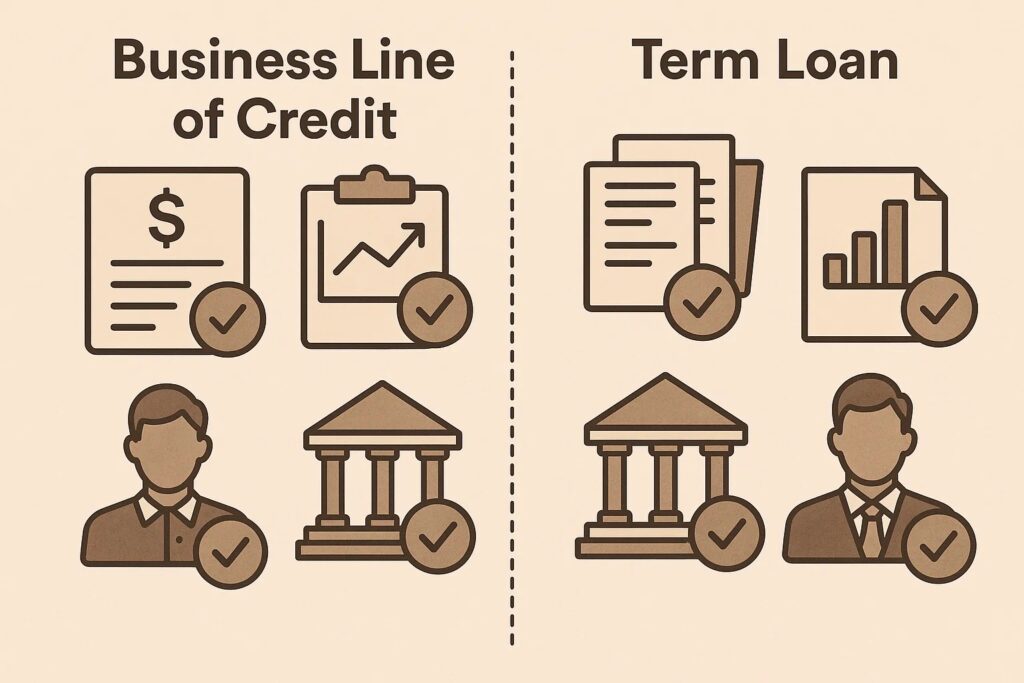
How to Qualify for a Business Line of Credit vs. a Term Loan

Every business reaches a point where extra funding becomes more than a luxury—it becomes a lifeline. Maybe your company is scaling quickly and needs new equipment. Maybe your seasonal income just isn’t enough to carry through the slow months. When you start exploring financial solutions, two common funding paths often stand out: the business line of credit and the term loan.

Though both are used to fund businesses, qualifying for each one requires a different approach, a different set of documents, and in many cases, a different financial story. Understanding what lenders are actually looking for behind the scenes can save you time, reduce your chances of rejection, and help you prepare the strongest application possible.

Let’s break down exactly how qualifying for a line of credit compares to a term loan—and what you can do to boost your chances of approval for either one.

How to Qualify for a Business Line of Credit vs. a Term Loan

The Basics: What’s the Difference in How They Work?

A business term loan is fairly straightforward. You borrow a specific amount of money, receive it all upfront, and repay it over a predetermined period—usually with fixed monthly payments. This kind of loan is often used for big, one-time expenses: buying equipment, funding expansion, or refinancing other debts.

On the other hand, a business line of credit is more like a financial safety net. It provides you with a pool of funds you can draw from whenever you need to. You only pay interest on what you actually use, and once you repay what you’ve borrowed, that credit becomes available again. It’s a revolving credit source, not unlike a credit card, and is often used to smooth out cash flow or manage short-term needs.

Because these two financial tools operate differently, lenders evaluate applicants differently for each.


Credit Score: How Good Does It Need to Be?

Your credit score is often the first gatekeeper. For term loans, most lenders look for a personal credit score in the mid-600s or higher, especially if you’re applying through a traditional bank. However, online lenders may approve scores in the low 600s, though that typically comes with higher interest rates and shorter repayment terms.

When it comes to a business line of credit, the bar is often set even higher. Because it provides ongoing access to capital, lenders want to feel confident that you won’t max it out irresponsibly. Scores of 680 or above are commonly expected, and some lenders prefer scores in the 700s for unsecured lines.

Keep in mind: lenders may review both your personal and business credit reports. It’s wise to review both before applying.


Time in Business: Does Longevity Matter?

Yes—especially for a line of credit. Lenders often feel more comfortable approving revolving credit for businesses that have shown stability over time. A company that’s been operating for at least 2 years has a better shot at securing a line of credit, though some online lenders may accept a shorter history if other factors—like revenue—are strong.

For term loans, the time-in-business requirement can be a little more flexible. Some fintech lenders are open to funding businesses that are as young as six months to one year old, particularly if monthly revenue is strong.

Either way, having a proven track record helps, and longevity is often used as a proxy for reliability.


Revenue Requirements: How Much Are You Earning?

Both options demand proof that your business is bringing in consistent income, but they emphasize it in slightly different ways.

For term loans, many lenders want to see at least $100,000 in annual revenue, or $8,000 to $10,000 per month, depending on the size of the loan. But fluctuations from month to month might not be a dealbreaker.

When it comes to qualifying for a line of credit, consistency matters more. Since this type of loan involves repeated access to funds, lenders want to be sure your cash flow is steady, not just large. They’ll look closely at your bank statements, possibly going back 6 to 12 months, to confirm that your income is predictable and timely.

If your business has highly seasonal income, be prepared to explain the pattern and offer supporting documents such as contracts, forecasts, or previous seasonal cycles.


Collateral: Is Security Needed?

The need for collateral depends on how much you want to borrow and how risky the lender sees your application.

Some term loans are secured, especially larger ones, and may require you to pledge business assets like vehicles, real estate, or equipment. Smaller, short-term loans are often unsecured but come with higher interest.

Lines of credit, especially those with higher limits, are often secured by inventory, accounts receivable, or cash deposits. Unsecured lines exist, but they’re harder to qualify for, and lenders offset their risk by tightening approval criteria.

If you’re willing to secure your loan, you may qualify for better terms, so have a list of assets ready if needed.


Documentation: What Will You Need to Show?

Getting approved for either financing option means proving that your business is financially sound. Here’s what’s typically expected:

For a term loan:

  • Business tax returns (1–2 years)
  • Profit & Loss statements
  • Business bank statements (3–6 months)
  • A list of existing debts
  • Possibly a business plan

For a line of credit:

  • Business bank statements (often 6–12 months)
  • Accounts receivable aging reports
  • Balance sheets
  • Tax returns
  • Revenue projections

The line of credit process can sometimes involve more ongoing financial check-ins even after you’re approved. Be prepared to keep your financials updated.


Which One Is Easier to Get?

There’s no universal answer. If your business is new, growing quickly, and needs a one-time infusion of capital, you might find it easier to qualify for a term loan. If your company is more established, with healthy cash flow and strong credit, a line of credit offers more flexibility—but you’ll have to clear a higher bar.

Here’s a quick breakdown:

CriteriaTerm LoanLine of Credit
Credit Score650+ (some leniency online)680+ preferred
Time in Business1–2 years (can be less)2+ years ideal
Annual Revenue$100,000+$150,000+ preferred
Collateral Required?SometimesOften, especially for higher limits
Approval Time1–7 days (online)1–2 weeks
source: Clara CFO Group

Prepare Now, Apply Smart

Too many businesses dive into the loan process blind, hoping for a quick win. But understanding the differences in how lenders assess each type of loan can save you time, protect your credit score, and increase your odds of getting approved the first time around.

Whether you’re leaning toward a line of credit or a traditional term loan, preparation is the single most powerful tool you have. Check your credit, organize your documents, evaluate your revenue patterns, and be honest about your risk profile. Doing the homework upfront doesn’t just help you get funded—it helps you choose funding that truly fits your business model.

The written content on this page was generated by ChatGPT.

Categories
Loan Approval & Qualification

Eligibility Checklist: Are You Ready to Apply for a Business Loan?

Applying for a business loan isn’t just about needing cash—it’s about proving your business is stable, legitimate, and prepared to handle repayment. Whether you’re expanding operations, investing in equipment, or navigating a temporary cash flow crunch, you need to be able to show lenders you’re ready.

Many business owners jump into the loan process without understanding what lenders look for. This results in rejections, wasted time, and even damage to your credit. That’s why we’ve created a straightforward checklist to help you evaluate your loan readiness before you start applying.

1. You’ve Nailed Down the “Why”

The first question any lender will ask is simple: Why do you need the loan? It’s not enough to say, “for growth” or “for working capital.” You need a clear, focused answer that explains how the loan will move your business forward.

Are you launching a new product line? Hiring staff for peak season? Opening a second location? Make sure your goal is defined—and that the funding amount ties directly to that goal.

✅ You’re ready if you can easily explain how the loan will be used and what you expect to gain from it.


2. Your Business Is Legally Structured and Registered

No lender is going to hand over money to a business that isn’t officially registered. You’ll need to have all the basics in place:

  • A legal business structure (LLC, corporation, etc.)
  • Federal EIN
  • Local permits or licenses
  • A separate business bank account

If any of these are missing or outdated, take care of them before applying.

✅ You’re ready if your paperwork is clean and your business is fully compliant with state and federal laws.


3. You’ve Been Operating Long Enough

Time in business is one of the first filters lenders use. In general:

  • Traditional lenders prefer 2+ years in business
  • Online lenders may accept 6–12 months
  • SBA loans often require 2 years

If you’re brand new, you’ll likely need to look into startup funding or alternative financing methods.

✅ You’re ready if you’ve got at least one full year of operations under your belt and can show business continuity.


4. Your Credit Isn’t Holding You Back

Lenders will nearly always pull your personal credit—and your business credit, if you’ve established it. This helps them determine how you’ve handled debt in the past.

Most look for:

  • FICO scores over 620 (some may accept lower)
  • A history of on-time payments
  • Low credit utilization
  • No recent bankruptcies or defaults

Don’t worry if your score isn’t perfect—just make sure it reflects consistent, responsible borrowing.

✅ You’re ready if your credit reports tell a story of reliability, even if they’re not spotless.


5. You Have Predictable Monthly Revenue

Loan providers want to be confident you’ll be able to make your payments. That means showing steady, recurring income over the past several months—ideally a year or more.

Be ready to share:

  • Recent bank statements
  • Year-to-date profit & loss reports
  • Last year’s tax return (business and personal)

Some lenders will accept $8K–$10K/month minimum revenue, while others will expect more depending on the loan amount.

✅ You’re ready if your business is generating consistent revenue and can cover the projected loan payments.


6. You Know How Much You Need (and What You Can Afford)

It’s important to apply for a loan that fits your actual needs—not just the maximum you think you can get. Too much debt can backfire, while too little may leave you unable to reach your goals.

Before applying, crunch the numbers:

  • How much funding will fully cover your intended use?
  • What’s your realistic repayment budget?
  • How long do you need to repay?

There are plenty of online calculators that can help you model different repayment scenarios.

✅ You’re ready if you know exactly how much money you need—and you’re confident in your ability to pay it back without stress.


7. Your Debt Isn’t Stretching You Thin

Your debt-to-income ratio (DTI) is a major red flag if it’s too high. This ratio shows how much of your income is already committed to debt payments—and lenders prefer to see this below 40–45%.

Here’s how to calculate it:

  • Add up your total monthly debt payments
  • Divide that by your gross monthly business income
  • Multiply by 100 to get your DTI percentage

✅ You’re ready if your debt load is manageable and there’s room to safely take on a new loan.


8. You Can Back It Up with a Business Plan or Loan Strategy

Some loans (especially SBA or bank loans) may require a formal business plan. Even if they don’t, having one improves your credibility and demonstrates that you’ve done your homework.

At minimum, you should have:

  • A summary of your business and goals
  • A breakdown of how you’ll use the funds
  • Revenue projections
  • A strategy for repayment

✅ You’re ready if you can clearly outline how the loan fits into your long-term business growth.


9. You’ve Researched Lenders and Know Your Options

There are more lending options now than ever—banks, credit unions, online lenders, and marketplaces. But not every lender is a good fit for every business.

Compare:

  • Interest rates
  • Loan terms
  • Funding speed
  • Fee structure
  • Customer reviews

Take the time to vet lenders before applying. This not only improves your chances of approval, but also ensures you’re not overpaying or getting stuck with rigid terms.

✅ You’re ready if you’ve reviewed your options and are targeting lenders that align with your needs and business profile.


Final Thoughts: Getting Approved Starts with Getting Ready

Getting a business loan approved is much easier when you approach the process like a lender would. Ask yourself: Would I lend money to this business?

If your paperwork is in order, your financials are solid, and you’ve clearly defined the loan’s purpose, you’re already ahead of the curve.

Use this checklist to plug any gaps before applying—and you’ll stand a much stronger chance of securing the funding you need.

source: Irvin Pena

👉 Explore Lender Reviews and Find the Best Match

If you’re ready to move forward, start by checking out our detailed comparisons of top-rated business loan platforms. We break down rates, terms, approval requirements, and more—so you can apply with confidence.

The written content on this page was generated by ChatGPT.

Categories
Loan Approval & Qualification

How Startups Can Qualify for a Business Loan Without Revenue History

Starting a new business often means dealing with uncertainty—from refining your product or service to building your first customer base. But one of the trickiest parts of launching is finding the money to grow, especially if your startup isn’t generating income yet.

For many new entrepreneurs, the question comes up quickly: Can I qualify for a business loan without any revenue?

The short answer is yes. Lenders typically prefer businesses with a financial track record, but that doesn’t mean it’s the only way to get approved. There are real paths to funding even before you make your first sale—you just have to know where to look and how to present your business.

Let’s break down what works, what lenders really care about, and how to position your startup to get that “yes,” even if your books are still blank.

Understanding Lenders’ Point of View

It’s not hard to see why most lenders lean on revenue as a key factor. It’s a solid sign of business stability, and it gives them confidence that they’ll be repaid. But when revenue isn’t available, they turn to other indicators—things like your personal credit, your business plan, your assets, and your commitment.

In other words, revenue is helpful, but it’s not everything.


1. Your Business Plan Is Your Proof of Potential

Without financial history, your business plan becomes your most important asset. Think of it as your pitch—not just to investors or partners, but to lenders who want to understand how your business will generate income in the near future.

A strong business plan should walk the reader through:

  • What your business offers and why it’s needed
  • Who your target market is and how you plan to reach them
  • Financial projections based on research—not just guesses
  • A realistic timeline for revenue generation
  • Exactly how the loan funds will be used

The more clearly you can show a lender how you’ll use their money to grow your business, the more likely they’ll say yes.


2. Your Personal Credit Matters—A Lot

When you don’t yet have business credit, lenders rely on your personal financial history. This includes your credit score, any current debts, and your overall credit habits.

If your credit report shows consistency and responsible borrowing, you’ve already got an advantage. If it needs work, now’s the time to take action: pay down debts, dispute errors, and avoid taking on new credit in the weeks before you apply.

Quick tip: Most lenders look for a personal credit score of at least 680, but some microloan programs may work with lower scores if other parts of your application are strong.


3. Choose the Right Type of Lender

Not all lenders operate the same way. Big banks are usually cautious when it comes to new businesses without financials. But other sources are more flexible and often built with startups in mind.

Some options worth exploring:

  • SBA Microloans: These go up to $50,000 and are handled by nonprofit organizations that work with early-stage businesses.
  • Community Development Financial Institutions (CDFIs): These lenders are known for working with newer businesses, particularly in underserved communities.
  • Online lenders: Some, like Accion or Kiva, focus on character and community support as much as financials.

Each of these lenders tends to look beyond just the numbers and take your full story into account.


4. Use What You Have: Collateral or a Personal Guarantee

While not all loans require it, offering something of value—known as collateral—can strengthen your loan application. This could be equipment, a vehicle, or even savings. Collateral reduces the lender’s risk and can increase your approval odds.

If you don’t have physical assets to pledge, many lenders will accept a personal guarantee instead. This means you’re personally responsible for repaying the loan if your business can’t.

It’s a risk, yes—but it can also be the difference between getting approved or not.


5. Partner With Someone Who Strengthens the Application

If you’re flying solo and don’t have much credit or collateral, consider teaming up. A co-signer with strong financials can back your application and provide reassurance to lenders.

This is a common move in startups where founders have different strengths—one may have the vision, the other the financial profile to get things moving.


6. Start Small and Build Your Profile Over Time

Sometimes the key to success is starting with a smaller win. Even if you can’t get a large loan upfront, consider applying for something more modest—a business credit card, a small working capital loan, or a microloan.

These smaller products can help you:

  • Build business credit
  • Show payment reliability
  • Improve your standing for future loans

Over time, these small wins can add up to a stronger foundation for bigger funding rounds.


7. Consider Alternatives Outside of Traditional Loans

Not every business needs to borrow from a bank to get off the ground. If you’re struggling to qualify, there are other funding paths that don’t require income history:

  • Crowdfunding platforms let you raise small amounts from a larger audience. It also proves market interest.
  • Friends and family can offer informal loans—but formalize terms in writing.
  • Business grants are available from local organizations, especially for minority-owned, veteran-owned, or women-led startups.
  • Angel investors may fund startups with strong ideas and growth potential in exchange for equity.

These routes come with their own trade-offs but can help fill the gap until you’re in a stronger position.

source: Business Credit

Focus on What You Can Control

Launching a business without a revenue stream doesn’t mean you’re out of options. While you may not check every traditional box, you can still make a strong case by showing lenders that you’re prepared, thoughtful, and serious about your business.

Start with what you have: a clear plan, solid personal credit, and the willingness to start small. Build from there, and you’ll put yourself in a position to access the funding you need—even if your startup is just beginning.

The written content on this page was generated by ChatGPT.

Categories
Loan Application Process

How to Strengthen Your Business Loan Application and Improve Approval Odds

Securing a business loan can feel daunting, especially with lenders scrutinizing every detail of your application. Whether you’re a startup looking for initial funding or an established business seeking expansion, navigating the loan approval process can be a challenge. The key to success lies in crafting a strong, comprehensive application that demonstrates your creditworthiness and business potential.

In this guide, we’ll dive deeper into the most effective strategies for strengthening your business loan application. From understanding what lenders look for to preparing detailed documentation and improving your credit profile, we’ll cover everything you need to increase your chances of approval. By the end, you’ll be equipped with practical tips to present yourself as a reliable borrower and secure the funding your business needs.

1. Understand Lender Expectations

Before submitting your application, it’s crucial to understand what lenders are looking for. Most lenders evaluate applications based on the “5 Cs of Credit”:

  • Character: Your credit history and reputation.
  • Capacity: Your ability to repay the loan, demonstrated through cash flow and financial stability.
  • Capital: The amount of money you’ve invested personally.
  • Collateral: Assets that can secure the loan.
  • Conditions: Economic factors affecting your business and the loan purpose.

Research the specific requirements of your chosen lender to ensure your application aligns with their expectations. Different lenders may prioritize these factors differently, so understanding their criteria can give you a strategic advantage.

2. Improve Your Credit Score

One of the most critical factors in loan approval is your credit score. Improving your credit can take time, but consistent effort will yield results. Here are some actionable tips to enhance it:

  • Pay Bills on Time: Consistent, on-time payments boost your score and demonstrate reliability.
  • Reduce Debt: Lowering your debt-to-income ratio shows financial responsibility and a strong repayment capacity.
  • Dispute Errors: Regularly check your credit report for inaccuracies and dispute them promptly to maintain accuracy.
  • Avoid New Credit Inquiries: Multiple inquiries can lower your score, so avoid applying for unnecessary credit lines.

By proactively managing your credit, you present yourself as a low-risk borrower, which can significantly increase your approval odds. Make it a habit to monitor your credit score regularly and address any issues as they arise.

3. Prepare Detailed Financial Documents

Lenders want proof of your business’s financial health. Being prepared with comprehensive and accurate documentation shows that you take your finances seriously. Ensure you have the following documents ready:

  • Profit and Loss Statements: Demonstrate revenue, expenses, and profitability over time.
  • Balance Sheets: Highlight your assets, liabilities, and overall financial position.
  • Cash Flow Statements: Showcase your ability to manage and sustain cash flow.
  • Tax Returns: Verify income consistency and financial stability over recent years.

Well-organized documentation not only speeds up the application process but also builds lender confidence in your business’s financial health.

4. Create a Solid Business Plan

Your business plan is a roadmap of how you intend to use the loan and how it will benefit your business. A thorough plan should include:

  • Executive Summary: An overview of your business and its mission.
  • Market Analysis: Insight into your industry, competition, and potential growth.
  • Revenue Projections: Detailed financial forecasts demonstrating loan repayment capabilities.
  • Loan Purpose: Clearly state how the funds will be used, whether for expansion, equipment, or working capital.

A comprehensive business plan signals to lenders that you have a clear vision and strategy, reducing perceived risk.

5. Offer Collateral or a Personal Guarantee

If your business lacks substantial assets, offering personal collateral or a guarantee can reassure lenders. This could include:

  • Real Estate: Property owned by you or the business.
  • Equipment: Machinery or vehicles that hold significant value.
  • Inventory: Goods that can be liquidated if necessary.

Collateral reduces the lender’s risk, making approval more likely, especially for higher loan amounts or startups.

6. Build Relationships with Lenders

Networking with potential lenders before you need a loan can be beneficial. Attend local business events, schedule informal meetings, and show genuine interest in their lending practices. Establishing a connection can make your application stand out when the time comes to apply.

7. Be Transparent and Realistic

Honesty is crucial when discussing your financial situation and business prospects. Overstating your revenue or minimizing challenges can backfire if the lender discovers inconsistencies. Present realistic projections and openly discuss how you plan to handle potential risks.

source: SCORE Mentors

Strengthening your business loan application requires preparation, honesty, and a thorough understanding of your financial standing. By improving your credit score, organizing documents, and presenting a clear, realistic business plan, you enhance your credibility as a borrower. Implement these strategies, and you’ll be well on your way to securing the funding you need.

Applying for a business loan doesn’t have to be intimidating. With the right preparation and a proactive approach, you can increase your chances of approval and secure the financial support your business deserves.

The written content on this page was generated by ChatGPT.